
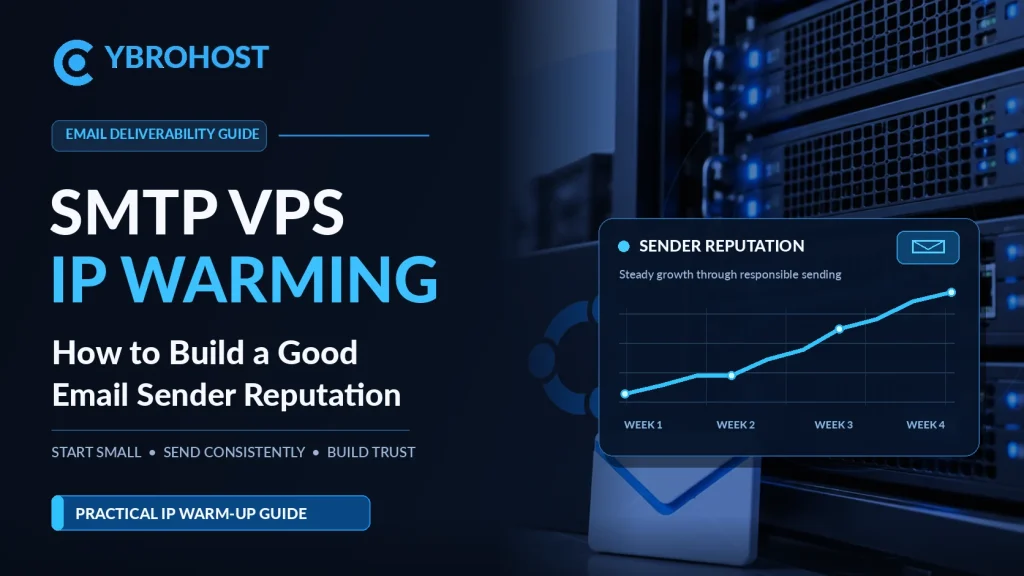
When you start sending email from a new SMTP VPS, your IP has little or no reputation. Mail providers like Gmail and Yahoo do not immediately trust a new sending IP, so sending a large volume too quickly can lead to throttling, spam placement, or blocks. That is why IP warming matters.
IP warming means starting with low email volume and increasing it gradually while keeping engagement strong and complaint rates low. If you are using a dedicated server from CybroHost SMTP VPS Hosting, warming your IP properly helps build a healthier sending reputation over time.
Why SMTP VPS IP Warming Is Important
A fresh IP is considered “cold.” According to Twilio’s SendGrid guide, inbox providers use IP reputation to judge sending behavior, and a new IP has no reputation history yet. A warm-up process gives providers time to observe your mail patterns, engagement, and list quality before you scale volume.
Without warming, even technically correct email can perform badly. A sudden spike from a new IP often looks suspicious. Good reputation comes from consistency, permission-based sending, and positive recipient signals such as opens, replies, and low complaint rates.
How to Warm Up an SMTP VPS IP
Start with your most engaged contacts first. These are recent subscribers, active customers, or users who regularly open your emails. Avoid sending to old or unverified lists during the warm-up period.
A simple approach is:
- Start with a small daily volume
- Increase gradually every few days
- Keep sending patterns consistent
- Watch bounce rates, complaint rates, and open rates
- Pause or slow down if performance drops
Google recommends increasing sending volume slowly, sending at a consistent rate, and avoiding sudden spikes. It also advises monitoring server responses, spam rate, and reputation as you scale.
What Else Affects Sender Reputation?
IP warming alone is not enough. You also need correct email authentication and clean sending practices.
Make sure your domain has:
- SPF
- DKIM
- DMARC
- Valid PTR/rDNS
- A matching hostname
Google’s sender guidelines also recommend sending only to subscribed users and separating different mail streams where possible. For example, transactional email and promotional campaigns should not always share the same sending pattern.
Your content also matters. Misleading subject lines, spammy wording, and poor list hygiene can hurt reputation even if your IP warm-up plan is careful.
Best Practice Tips
Warm up one IP at a time if you are using multiple dedicated IPs. Send daily instead of in random bursts. Remove inactive contacts, honor unsubscribes quickly, and keep complaint rates as low as possible.
If your SMTP VPS is for business outreach or email marketing, patience is important. Building reputation takes time, but damaging it can happen very quickly.
Final Thoughts
SMTP VPS IP warming is one of the most important first steps when launching a new mail server. A slow and controlled ramp-up, good list hygiene, and proper DNS authentication can help you build a strong sender reputation and improve inbox placement.
FAQs
How long does SMTP IP warming take?
It depends on sending volume and engagement, but many senders warm an IP over 2 to 6 weeks.
Should I send to my full list immediately?
No. Start with your most engaged users first and expand gradually.
Can I warm multiple IPs at the same time?
Yes, but each IP should be warmed carefully and monitored separately.
What happens if complaint or bounce rates rise?
Slow down your volume, review your list quality, and fix authentication or content issues before scaling again.
